


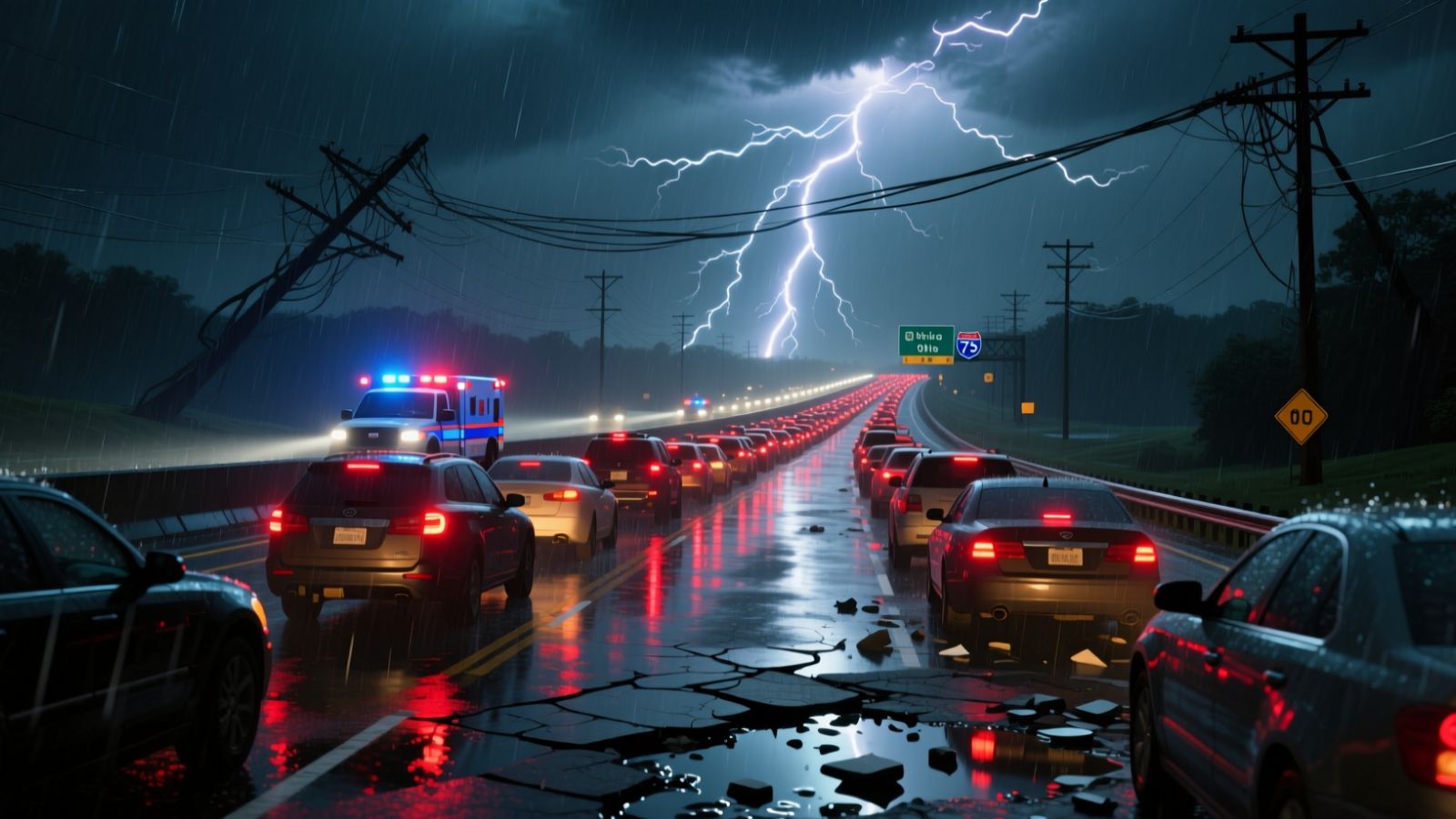
The I-75 power line shutdown became one of the most disruptive infrastructure incidents in recent years, affecting thousands of drivers, multiple counties, and regional power grids. What began as a routine severe-weather alert escalated into a major emergency when a section of high-voltage power lines running along Interstate 75 suddenly failed. Strong winds, saturated soil, and intense storms combined to damage several support towers, causing the lines to sag dangerously close to the highway.
That left officials with two major problems:
- The immediate risk of electrified lines falling onto the interstate, creating a life-threatening hazard for drivers.
- Potential overloads and outages within the electrical grid, since the damaged lines were part of a major transmission route.
To maintain public safety, transportation and utility authorities made the urgent decision to shut down a long stretch of I-75 and temporarily disable the affected portion of the power grid. The shutdown quickly captured public attention, raising questions about infrastructure resilience, emergency preparedness, and how severe weather continues to pressure the electrical and transportation systems.
In this article, we explore the full picture behind the I-75 power line shutdown — what caused it, how officials responded, what the shutdown meant for the region, and what lessons can be learned for the future.
How Severe Weather Triggered the Incident
The power line failure occurred during a period of severe storms that moved across the region with powerful winds and unpredictable gust patterns. Weather officials reported:
- Wind gusts exceeding 60–70 mph
- Lightning strikes along the transmission corridor
- Heavy rainfall weakening the ground around tower foundations
- Sudden pressure shifts affecting tension in the lines
High-voltage transmission lines are engineered to withstand heavy weather, but the combination of wind and saturated soil can compromise even strong support towers. After the storm’s peak, inspectors discovered that:
- A tower’s structural integrity had been compromised
- Guide wires had loosened
- Several insulators showed wind-related stress fractures
As the line sagged lower, the risk increased dramatically. If the live cable had snapped or touched the roadway, it could have resulted in fatal electrocutions, vehicle fires, or widespread blackouts.
Why Officials Shut Down I-75 Immediately
The moment sagging lines were detected, officials had only minutes to make a decision. Interstate 75 is one of the busiest highways in the region, and any danger involving high-voltage transmission lines posed a catastrophic risk.
Authorities shut down the interstate for three main reasons:
1. Safety Risk to Motorists
Drivers passing underneath the lines could have been exposed to deadly electrical discharge. Even without direct contact, high-voltage arcs can jump distances, especially in wet conditions. Closing the highway was the only safe option.
2. Preventing Chain-Reaction Damage
If the sagging line snapped, it could have:
- Hit moving vehicles
- Started a fire
- Triggered additional tower collapses
- Caused electrical surges across the grid
Stopping traffic minimized potential secondary damage.
3. Allowing Emergency Crews Immediate Access
Repair crews, bucket trucks, cranes, and utility teams needed full access to the corridor. Any vehicle traffic would have slowed their response.
The result was an extended shutdown that lasted hours and, in some areas, continued into the next day.
Impact on Drivers, Communities, and Power Customers
The I-75 shutdown had ripple effects across the region.
Traffic Disruptions
The highway closure led to:
- Miles-long backups
- Detours onto local roads
- Significant delays for commuters and freight carriers
- Slowed emergency response in nearby areas
Because I-75 is a major trucking and logistics route, commercial delays were especially costly.
Power Grid Instability
Temporarily shutting down the affected high-voltage line required power companies to reroute electrical loads. This led to:
- Isolated outages in nearby neighborhoods
- Voltage drops in surrounding areas
- Increased pressure on backup transmission systems
Utilities had to carefully balance the grid to avoid a cascading failure.
Business and Service Interruptions
Local businesses experienced:
- Temporary shutdowns
- Point-of-sale connectivity issues
- Delays in deliveries and shipments
Although most disruptions were short-lived, they still created economic strain.
How Crews Repaired the Damage
The restoration process involved several steps, each requiring precision and coordination.
1. Assessment & Hazard Control
Utility teams first inspected all towers and lines in the affected section. Safety zones were established to prevent accidental contact with energized components.
2. Power Rerouting
Electricity was redirected around the damaged section to protect the grid and allow safe repairs.
3. Tower Stabilization
Engineers reinforced weakened tower bases, realigned bent cross-arms, and replaced damaged insulators.
4. Line Re-Tensioning
The sagging lines were tightened, lifted, or replaced entirely. Specialized equipment ensured proper tension to prevent future sagging.
5. System Testing
Before restoring normal flow, crews performed:
- Load tests
- Thermal imaging checks
- Electrical resistance measurements
- Ground inspections
Only after passing all tests were the lines safely reactivated.
Why Incidents Like This Are Becoming More Common
Climate patterns are shifting, and severe storms are increasing in both frequency and intensity. This places extra stress on aging infrastructure — especially high-voltage transmission lines along major highways.
Factors contributing to more shutdown incidents include:
- Extreme winds from stronger storm systems
- Heavier rainfall increasing soil instability
- Old or outdated transmission towers
- Growing electricity demand stressing the grid
- Expansion of transportation corridors
Infrastructure built decades ago was not designed for today’s climate realities, and events like the I-75 shutdown highlight the need for modernization.
Long-Term Solutions Being Considered
In the aftermath of the incident, transportation and utility agencies began evaluating long-term prevention strategies, including:
- Stronger tower designs resistant to extreme winds
- Upgraded insulators and support structures
- Improved remote monitoring for sag detection
- Tree-trimming and vegetation management along corridors
- Burying select lines underground (where feasible)
- Enhanced emergency response systems
These solutions aim to prevent similar failures and increase infrastructure resilience during severe weather.
Conclusion: A Wake-Up Call for Infrastructure Safety
The I-75 power line shutdown was more than an isolated incident — it was a reminder of how fragile critical infrastructure can be when exposed to increasingly extreme weather conditions. Thanks to swift action by officials, major tragedy was avoided. But the event also raised important questions about preparedness, grid stability, and the urgency of upgrading the systems that millions rely on daily.
As severe weather becomes more common, investing in stronger, more resilient infrastructure is no longer optional — it’s essential.
FAQs
1. What caused the I-75 power line shutdown?
Strong winds and severe storms damaged power line towers, causing the lines to sag dangerously close to the highway.
2. Why was the highway closed?
The sagging high-voltage line posed an immediate risk to drivers, so officials shut down I-75 to prevent accidents and allow safe repairs.
3. Did the incident cause power outages?
Yes, some areas experienced temporary outages or voltage drops as power was rerouted.
4. How long did repairs take?
Repairs typically took several hours, though full restoration of normal grid flow sometimes extended into the next day.
5. Could this happen again?
Yes. Increasing severe weather and aging infrastructure mean similar incidents are possible unless significant updates and maintenance are implemented.
